
September 15, 2025 |
Category: Politics
435 views
జహీరాబాద్ భారత యూనియన్ లో విలీనానికి నేటికీ 77 యేండ్లు
జహీరాబాద్ భారత యూనియన్ లో విలీనానికి నేటికీ 77 యేండ్లు.
ఆపరేషన్ పోలో లో భాగంగా నైజం సైన్యానికి భారత యూనియన్ సైన్యానికి 4 రోజు జహీరాబాద్ శివారులోని అసద్ గంజ్ వద్ద 16 సెప్టెంబర్ 1948 జరిగినది . మిలిటరీ హైదరాబ్ లో కి రాకుండా ఉండటానికి బ్రిడ్జిని కూల్చివేయాగా స్థానికుల సహాయంతో తాత్కాలిక చెక్కలవంతెన నిర్మించి సైన్యం నైజం రాష్ట్రం లోనికి మొదటగా జహీరాబాద్ లో నే ప్రవేశించి అస్తగతం చేసుకుంది .
Finally when the Nizam’s Govt, sent their external Affairs Minister, Nawab Moin Nawaz Jung to the UN Security Council, in September 1948, Sardar felt that there was no other alternative but to invade Hyderabad. After making a careful study, the decision was finally communicated to the Southern Command, who recommended September 13 as the best date to start the operations. The official Hyderabad State Army was actually more or less a sub unit of the Razakars, consider this, the total strength of the Nizam’s Army was 22,000 while the Razakar’s made up around 200,000, clearly a case of the tail wagging the dog. The Army was led by El Eldroos, a close confidante of the Nizam, of Arab Hadrami origin, who had fought in both the World Wars, however an utterly inept commander and strategist to boot. The Hyderabad Army actually was more a collection of mercenaries, which included Arabs, Rohillas, Pathans and Muslims from Uttar Pradesh. Though the Razakars made up the bulk of the Army, only 25 % of them were armed with modern weaponry, the rest used swords and outdated equipment. What it meant is that while the Razakars could harass and bully, hapless, defenseless civilians, they just were not equipped for actual combat.
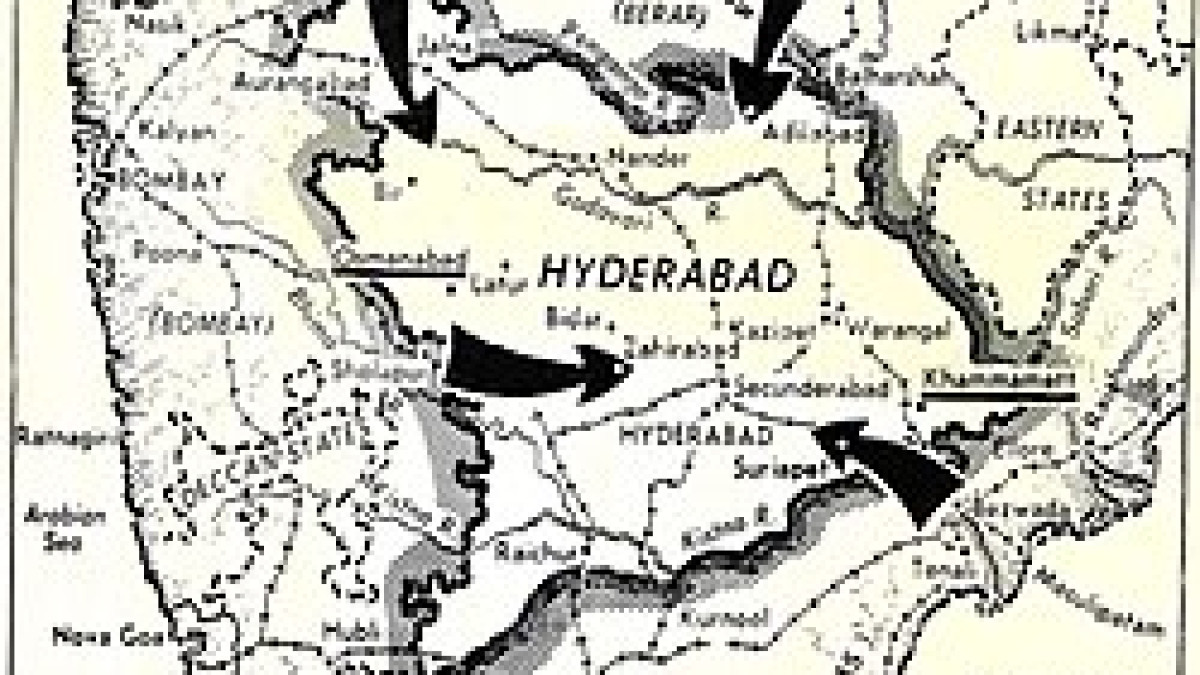
The Indian Army was commanded by Gen. Jayanto Nath Chaudhari, a graduated from Kolkata’s St Xavier’s nicknamed as Mucho, and who had fought in the deserts of Africa as well as the Middle East during WWII. The final plan for Operation Polo( so called because of the large number of polo grounds in Hyderabad then), was formulated by Lt.Gen. Eric Goddard, GOC of the Southern Command of India and named after him. It was however Lt.Gen Sri Rajendrasinhji Jadeja, who belonged to the Jamnagar Royal family, who actually supervised the operation when he took over as GOC of the Southern Command, from Goddard. The plan envisaged two thrusts into Hyderabad, one from the Western side by Gen. J.N.Chaudhari , that would begin from Sholapur, and had 2 infantry brigades, one armored brigade and a strike force. The other thrust from the Eastern side, would be led by Gen.A.A.Rudra that would start from Vijayawada, which consisted of the Gurkha Rifles, 4 Infantry Battalions, and one squadron of the Poona 17th Horse.
On Day 1, September 13th, a fierce battle was fought at Naldurg Fort near Solapur, where the 2nd Sikh Infantry, managed to secure the fort, after resistance from 1 Hyderabad Infantry. There was resistance in the towns of Jalkot and Tuljapur from the Razakars, the latter town saw a 2 hr long battle, that finally saw the Razakars losing out. On the Eastern front, there was major resistance from two armored units of the Hyderabad State Army, consisting of Humbers and Staghounds, before they were overpowered and managed to reach the town of Kodad in Nalgonda district. From the other end, Hospet was captured from the Razakars, while the 5/5 Gurkha Rifles managed to secure a vital bridge over the Tungabhadra River. On Day 2, Osmanabad faced an attack from the Gurkha Rifles and an 8th cavalry squadron, as they attacked the city. There was heavy street to street fighting between the Indian army and the Razakars, who put up a fierce resistance, before the own finally fell. Aurangabad was attacked by six infantry and cavalry columns under Maj.Gen.D.S.Brar, and soon the civil administration surrendered. Jalna fell on Day 3, Sept 15, while air strikes by the Indian Air Force, cleared the town of Suryapet in Nalgonda, which fell to the Indian Army. Zahirabad fell to the Indian Army on Day 4, Sept 16, though they still kept facing ambush attacks from the Razakars.
Finally on September 17th, 1948, the Indian Army entered the town of Bidar now in Karnataka, while another column took over the town of Chityal, in Nalgonda district, around 60 KM from Hyderabad. With Hingoli in Maharashtra, also falling to the Indian Army, the Nizam knew he had lost the game. The Hyderabad State Army was utterly routed, with 490 dead and 122 injured, and around 1647 becoming prisoners. The Razakar’s fared even worse, they lost 1373 of their men, and 1911 were captured, and with it their pipe dream of hosting an independent Hyderabad too. The Nizam announced the ceasefire, at 5 PM IST, disbanded the Razakars and allowed the Indian Army entry into Hyderabad. On September 18, El Edroos, met J.N.Chaudhuri and surrendered to him, while Qasim Rizvi was arrested by the Indian Government. Laik Ali was kept in house arrest, at Begumpet, from where he managed to escape in 1950. It also effectively ended the 235 yr old rule of the Asaf Jah Dynasty, which at it’s peak had extended from Malwa in the North to Trichy in the South, and was the last vestige of the Mughal rule in India.